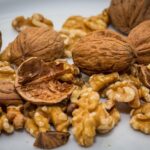
Cashews vs Walnuts: Which Is Less Inflammatory?
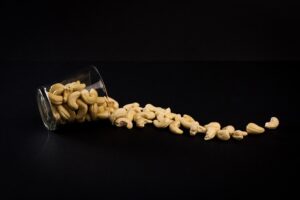
Cashews
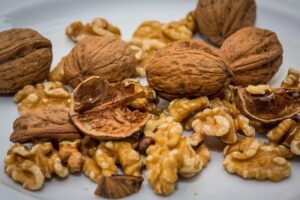
Walnuts
Walnuts are less inflammatory than cashews, and neither one is a nut you need to avoid. They are interchangeable in a salad, on porridge or straight out of your hand.
Walnuts carry more plant omega-3 than any other common nut, plus the compounds packed into that bitter papery skin, which your gut bacteria turn into a form your body can use. A cashew is softer and much starchier, with far less fibre, so it gives you less to work with and the bag empties faster. Keep cashews for what they are unbeatable at, which is blending into a creamy dairy-free sauce, and make walnuts the ones you actually snack on.
Side by side
| Cashews | Walnuts | |
|---|---|---|
| Inflammation Score | Low · 3/10 | Low · 1/10 |
| Category | Nuts & Seeds | Nuts & Seeds |
| Serving size | 1 small handful (28 g, about 18 nuts) | 1 small handful (28 g, about 14 halves) |
| Key nutrients | Copper, Magnesium, Oleic acid, Starch | Alpha-linolenic acid (ALA), Ellagitannins (in the skin), Gamma-tocopherol, Copper |
| How often | A small handful most days, plain and unsalted | Daily, one small handful, raw and with the skins on |
On the AIP diet
Cashews
Cashews come out during the elimination phase of the Autoimmune Protocol, along with every other nut and seed. That one stings more than it sounds, because cashew cream is the standard dairy substitute outside AIP, and on the protocol coconut milk takes the job. Nuts return early in the reintroduction, but trial cashews on their own: reactions to them are common and can be sharp.
Walnuts
Walnuts are out during the elimination phase of the Autoimmune Protocol. So is every other nut and seed, and walnut oil with them. This is one of the harder cuts for anyone who lives on salads and pesto, where walnuts do the work of both crunch and fat. Nuts return early in the reintroduction, and a walnut is easy to trial because you eat it on its own.
What each one brings
Cashews
- A small handful covers most of a day's copper, which the body uses to build antioxidant enzymes
- The fat is largely the same monounsaturated kind that makes up olive oil
- Soaked and blended they make the creamiest dairy-free sauce of any nut
- A quiet source of magnesium, which most people fall short of
Walnuts
- Carries more plant omega-3 than any other common nut
- The bitter papery skin is where the plant compounds sit, so leave it on
- Your gut bacteria turn those compounds into a form the body can use
- Walnut-rich diets brought down triglycerides and cholesterol in pooled trials
Watch out for
Cashews
- The starchiest nut on the shelf, with about a quarter of the fibre of an almond
- Cashew allergy is less common than peanut allergy, but the reactions are often severe
- Most are sold fried in oil and heavily salted, or glazed with honey
- Soft rather than crunchy, so they take less chewing and a bag empties fast
Walnuts
- The fragile fat spoils fast, and a sharp, sour taste means the nut is past it
- Sugar glazed and candied walnuts belong with dessert, not with a handful of nuts
- Tree nut allergy is common and can be severe
- Around 185 calories in a handful, so a bag goes down quickly
Get the inflammation score of any meal
Just snap a photo or describe your food to get its inflammation score and uncover hidden patterns that may be affecting your well-being.