| Prep Time | Cook Time | Total Time | Servings |
|---|---|---|---|
| 20 minutes | 4 hours | 9 hours 20 minutes | 8 |
What Is Oven-Baked Beef Jerky with Garlic and Ginger?
Jerky is thin strips of lean meat, dried slowly until they hold without a fridge. This version bakes in the oven, after the beef marinates in coconut aminos, garlic and fresh ginger. Lean beef, garlic and ginger keep this snack’s inflammatory load low.
What Makes This Recipe Anti-Inflammatory?
Fresh ginger contributes gingerols, compounds studied for their role in oxidative stress. Grated garlic releases allicin and other organosulfur compounds, the same family behind its strong smell.
Lean eye of round supplies protein and zinc, a mineral that supports normal immune function. Apple cider vinegar adds acetic acid, the compound behind its sharp taste.
Every ingredient is compliant with the AIP elimination phase. There are no grains, legumes, nightshades, dairy, eggs, nuts, seeds or seed-based spices, and coconut aminos stand in for the soy sauce used in traditional jerky marinades.
Ingredients
- 2 pounds beef eye of round, trimmed of all visible fat
- 1/2 cup coconut aminos
- 2 tablespoons apple cider vinegar
- 4 garlic cloves, finely grated
- 1 tablespoon fresh ginger, finely grated
- 1 teaspoon sea salt
Directions
Step 1
Freeze the trimmed beef for 1 hour before slicing it. Firm, partly frozen meat is easier to cut into thin, even strips than meat straight from the fridge.
Step 2
Slice the beef against the grain into strips about 1/4 inch thick. Cutting against the grain gives tender jerky, while cutting with the grain gives strips that chew tougher. Trim away any fat still on the strips, since fat turns rancid over the long drying time ahead.
Step 3
Combine the coconut aminos, apple cider vinegar, garlic, ginger and sea salt in a bowl or a sealable bag. Add the beef strips, cover and refrigerate for 4 to 24 hours.
Step 4
Remove the beef from the marinade and pat the strips dry with paper towels. Wet strips take longer to dry in the oven. Arrange the strips on wire racks set over baking sheets lined with foil, without letting them touch.
Step 5
Bake at 325 degrees F (163 degrees C) for about 10 minutes. Check the thickest strip sideways with an instant read thermometer until it reads 160 degrees F (71 degrees C).
Step 6
Lower the oven to its lowest setting, ideally 170 degrees F (77 degrees C). Prop the door open slightly with a wooden spoon so moisture can escape. Dry the strips for 3 to 4 hours, rotating the baking sheets halfway through.
Step 7
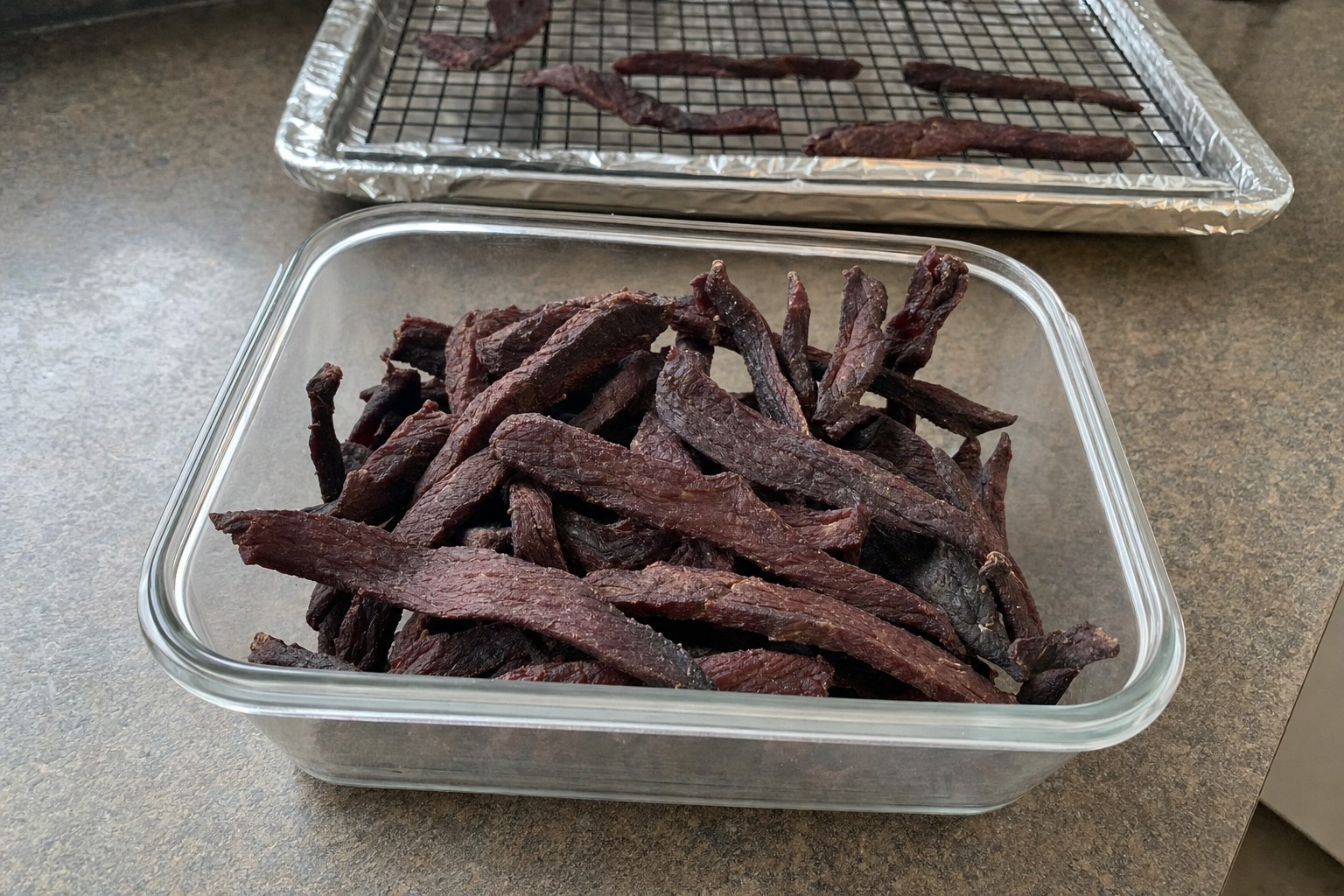
The jerky is ready when a strip bends and cracks without snapping in half, with no damp or shiny spots left. Let the strips cool completely, then blot away any fat that rises to the surface with a paper towel. Store the jerky in an airtight container.
Nutrition Facts (per serving)
| Calories | 140 |
| Fat | 3g |
| Carbs | 2g |
| Protein | 26g |
InflammaScore
1 Good! Very low inflammation potential
Q&A
Q1: Is this recipe suitable for the AIP elimination phase?
A1: Yes. Beef eye of round, coconut aminos, apple cider vinegar, garlic, ginger and sea salt are all permitted during elimination. There is no black pepper in the ingredient list, since peppercorns fall outside the herbs that come from leaves and roots, and no seed-based spices such as cumin, coriander or mustard.
Q2: Why does the recipe call for baking at 325 degrees F before the long, low drying time?
A2: That first bake brings the meat to 160 degrees F (71 degrees C), the temperature the USDA recommends for jerky. Bacteria can survive the dry heat of a dehydrator or a low oven, and marinating raw beef does not make it safe on its own.
Q3: How do I know the jerky is actually done?
A3: Bend a cooled strip in half. It is ready when it cracks along the fold without snapping clean apart, and no part of it feels damp or looks shiny. A strip that still bends soft and smooth, with no cracking at all, needs more time in the oven.
Q4: How long does this jerky keep, and how should I store it?
A4: Homemade jerky like this keeps for 1 to 2 months. Store the cooled strips in an airtight container, in a cool, dark place such as a pantry shelf, blotting away surface fat first, since fat turns rancid.
Q5: Which cut of beef works best for jerky?
A5: Lean cuts like eye of round or top round work best for jerky. Both come from a part of the animal with very little marbling, so there is barely any fat left to deal with before marinating.