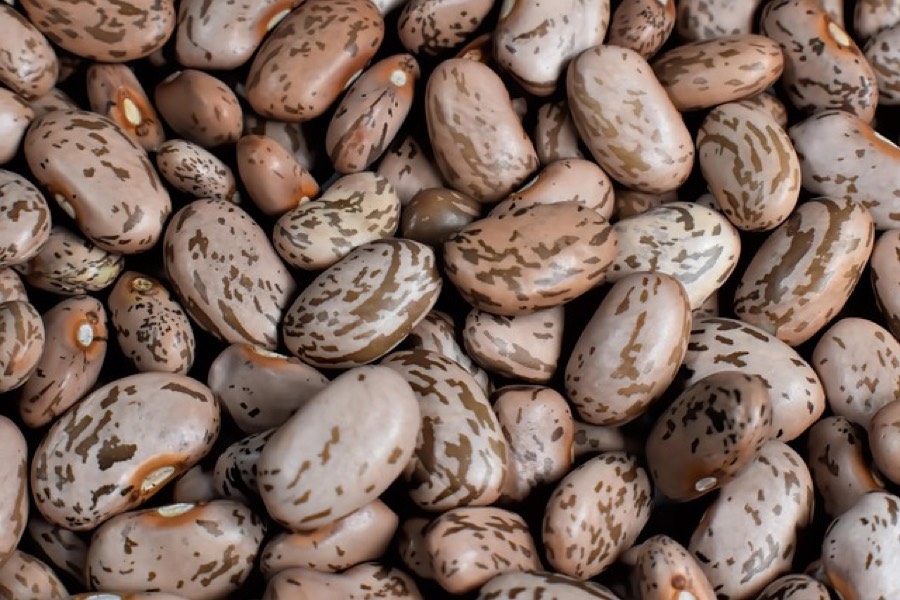
Pinto Beans
Why pinto beans are anti-inflammatory
Pinto beans are anti-inflammatory, and the reason starts with their soluble fibre. This fibre soaks up water and turns into a gel as it travels through your gut. The gel traps bile, a fluid your liver makes out of cholesterol to digest fat, and carries the bile out of the body. Your liver then takes cholesterol from your blood to replace the bile it lost. That matters here because cholesterol that settles in an artery wall is what pulls the immune system to the spot, and that reaction is inflammation.
In one trial, adults who ate half a cup of pinto beans a day for eight weeks ended up with less cholesterol in their blood, LDL included. An inflammation marker was measured in the same blood samples, and it did not change. Eight weeks is short for something that builds over years, so the change beans give you is slow rather than something you feel.
What you buy matters, because pinto beans are sold in three forms. Dried beans in a bag are only beans. Tinned whole beans sit in salted water, so drain them and run cold water over them. Tinned refried beans need a closer look, because they are usually mashed with lard or oil and salted heavily.
To cook dried beans, soak them overnight, pour that water away and simmer until they are soft all the way through. Cook more than you need and freeze the rest in portions. If beans are rare in your week, start with half a cup, because the wind they cause settles once you eat them regularly.

Pinto Beans on the AIP diet
Pinto beans are out during the elimination phase of the Autoimmune Protocol, which drops every legume on day one. The protocol treats the mix of seed proteins and fibre in a bean as too much work for a gut that is already reacting. Legumes also sit at the back of the reintroduction queue, behind eggs, nuts and seeds, so expect months. Mashed squash fills the same place in a bowl until then.
Benefits
- Soluble fibre that carries bile out, so your liver pulls cholesterol from your blood
- Half a cup a day lowered cholesterol in adults over eight weeks
- A cup cooked brings around 15 grams of protein along with the fibre
- Cheap, keep for years in the cupboard, and freeze well once cooked
Watch out for
- Wind and bloating are common at first if legumes are new to your week
- Tinned refried beans are usually mashed with lard or oil and heavily salted
- Tinned whole beans sit in salty water, so drain and rinse them before use
- Half cooked beans are hard on the stomach, so simmer them until fully soft
Frequently asked
Are pinto beans anti-inflammatory?
Yes. Their soluble fibre turns into a gel in the gut and carries bile out with it, and your liver has to take cholesterol from your blood to replace that bile. Cholesterol that settles in an artery wall is one of the things the immune system reacts to. Pinto beans also release their starch slowly, so a meal built on them keeps blood sugar steady.
Do pinto beans have to be soaked before cooking?
It helps. A night in cold water softens them, cuts the simmering to about an hour and washes out some of the sugars that cause wind. Pour that water away and cook them in fresh water. If you forget, a longer simmer gets there in the end, so soaking is convenience rather than a rule.
Are refried beans inflammatory?
It depends on what they were cooked in. Refried beans start as pinto beans, so the fibre and the protein are still in there. The usual tin adds lard or oil and a lot of salt, which turns a plain bean into a much fattier, saltier food. Mash cooked beans at home with a little olive oil and you keep the good part.
Are pinto beans allowed on the AIP diet?
No. The elimination phase takes out every legume on day one, pinto beans with them. They also come back late in the reintroduction, behind eggs, nuts and seeds, so a strict run of the protocol can mean months without them. Cooked squash does the same job in a burrito bowl meanwhile.