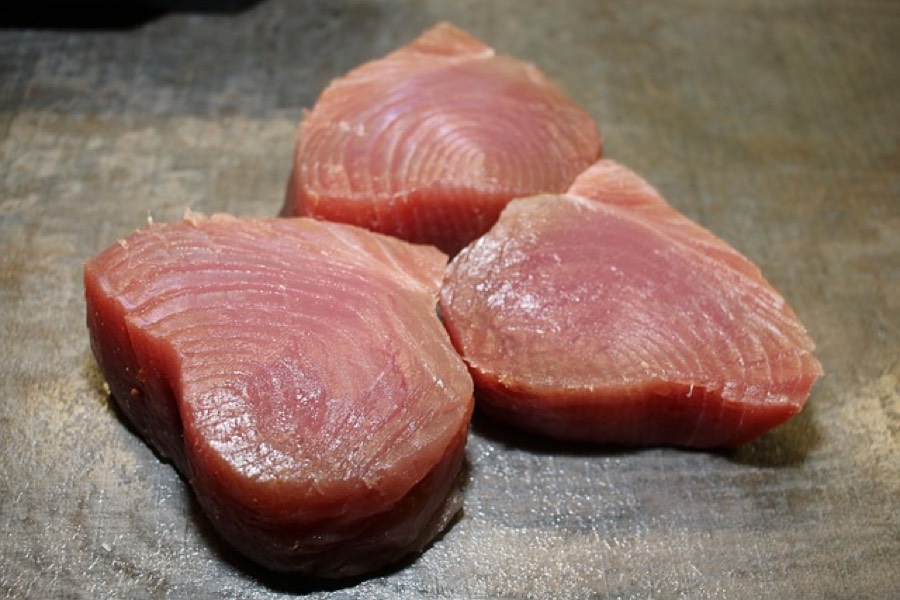
Three raw tuna steaks on a stone surface

Tuna

Anti-InflammatoryFish & Seafood
Low
Inflammation Score
2/10
Anti-inflammatoryInflammatory
Serving size
3 oz (85 g) cooked or drained
Key nutrients
EPA & DHA omega-3SeleniumVitamin B12Protein
How often
Two or three servings a week, in water or fresh

Why tuna is anti-inflammatory

Tuna is anti-inflammatory, and the reason is its omega-3 fats. It belongs to the oily fish, the group that does more against inflammation than anything else in the meat and fish aisle. Mercury is what stops it at 2 out of 10 on the inflammation scale.

Tuna hunts other fish and can live for decades, so mercury collects in its flesh year after year and never leaves. That makes the size of the fish the thing to read on the tin. Canned light tuna is skipjack, a small tuna caught young, and it carries around a third of the mercury of the bigger albacore sold as white tuna.

The liquid in the tin changes the fish as well. Tuna and the oil around it trade fats on the shelf. Tuna canned in oil ends up carrying a lot of the linoleic acid from the oil around it. Part of what you drain away is the fish’s own fat. Tuna in water does not make that trade.

A fresh steak is a different food again, with more omega-3 than the tin and more mercury with it. Two or three servings a week suits most people. Pregnancy is the exception, because mercury reaches the baby, and there the small canned tuna is the one to keep.

Tuna on the AIP diet

Tuna is allowed on the Autoimmune Protocol from day one, elimination phase included, so there is nothing to reintroduce later. Read the tin, though. Water or olive oil is fine, sunflower and soybean oil are out during elimination, and added vegetable broth usually means soy. Fresh tuna needs no label at all.

Benefits

  • Omega-3 fats that lower the signs of inflammation in a blood test
  • One of the richest everyday sources of selenium
  • A lot of protein for very few calories
  • Cheap, keeps for years and needs no cooking

Watch out for

  • Mercury builds up in tuna and stays there
  • Albacore, or white tuna, carries about three times more than canned light
  • Packed in oil, it trades away part of its own omega-3
  • Mayonnaise adds more fat to a tuna salad than the fish brings

Get the inflammation score of any meal

Just snap a photo or describe your food to get its inflammation score and uncover hidden patterns that may be affecting your well-being.

Download on the App StoreGet it on Google Play
InflammaScan app

Frequently asked

Is tuna inflammatory?

No. Tuna is an oily fish, and the omega-3 fats it carries work against inflammation rather than for it. The catch is mercury, which builds up in a fish that hunts other fish and lives a long time. That is why tuna scores a 2 on the inflammation scale and salmon scores a 1.

How much tuna is safe to eat?

Two or three servings a week works for most people, and canned light tuna is the one to lean on, because it comes from a small fish with less mercury. Albacore, sold as white tuna, carries about three times more, so space that one out.

Is canned tuna in oil or in water better?

In water. On the shelf the fish and the oil trade fats, so tuna in sunflower or soybean oil takes on that oil and loses part of its own omega-3 into the liquid you drain away. Tuna in olive oil is the exception worth paying for.

Is tuna allowed on the AIP diet?

Yes, in every phase, elimination included. Read the tin: water or olive oil is fine, seed oils are not, and added vegetable broth usually means soy.

The easiest way to follow an anti-inflammatory diet.

Identify inflammatory foods in seconds, log your symptoms and discover what’s inflaming you. Includes hundreds of recipes.

Download on the App StoreGet it on Google Play
InflammaScan app