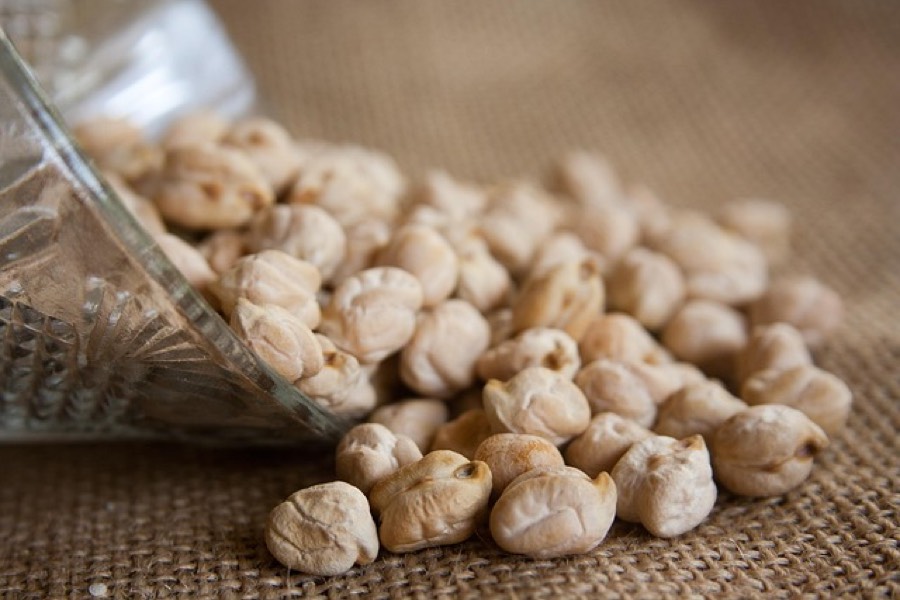
Dried chickpeas spilling from a glass bowl onto a burlap cloth

Chickpeas

Anti-InflammatoryLegumes
Low
Inflammation Score
2/10
Anti-inflammatoryInflammatory
Serving size
1 cup cooked (165 g)
Key nutrients
Resistant starchRaffinose fibreFolateManganese
How often
Most days, a cup cooked in place of a refined starch

Why chickpeas are anti-inflammatory

Chickpeas are anti-inflammatory, and the thing people hold against them is part of the reason. They carry a group of sugars that human digestion has no tool for, so they arrive in the large intestine whole and the bacteria living there take them apart. Gas is the side effect. What else comes out of that is the point.

Those bacteria turn the sugars into short chains of fat that the cells lining your gut burn as fuel. Fed like that, the lining stays tight, and a tight lining lets less through into the blood for the immune system to react to. So chickpeas do not calm inflammation from the outside. They feed the part of you that already keeps it low.

On the plate they do two jobs at once. A cup of cooked chickpeas brings around 15 grams of protein and 12 of fibre, so one serving covers the starch of the meal and much of the protein. That is why a bowl sits with you for hours and the same weight of white rice does not.

Chickpeas score 2 out of 10 on the inflammation scale, and little about them pulls the other way. The tin is the one thing to watch, because some brands are salty, and a drain and a rinse takes most of it off. If legumes are rare in your week, start with half a portion. The bacteria doing the work need a few weeks to build up.

Chickpeas on the AIP diet

Chickpeas are not allowed during the elimination phase of the Autoimmune Protocol. They are a legume, and legumes go out on day one, largely for the same hard to digest sugars that make them useful the rest of the time. They also come back late, well after eggs and seeds, so plan for a long wait. Roast squash or cauliflower fills the same slot on the plate meanwhile.

Benefits

  • Carry sugars the gut bacteria live on, which keeps the gut lining fed and tight
  • Bring starch and protein in one food, so a bowl holds off hunger for hours
  • Raise blood sugar slowly, which matters more than any single nutrient in them
  • Cheap, keep for years in the cupboard, and need no skill to cook

Watch out for

  • Gas and bloating are common at first if legumes are rare in your week
  • Tinned ones can be salty unless you drain and rinse them
  • Still a starchy food, so a big bowl is not a free vegetable
  • Roasted snack packs are often fried and heavily salted, which is another food

Get the inflammation score of any meal

Just snap a photo or describe your food to get its inflammation score and uncover hidden patterns that may be affecting your well-being.

Download on the App StoreGet it on Google Play
InflammaScan app

Frequently asked

Are chickpeas anti-inflammatory?

Yes. Most of the work happens after you have eaten them. Chickpeas carry sugars and fibre that your body cannot break down, so they reach the bacteria in your gut whole, and those bacteria produce things that keep the gut lining in good shape. On top of that, chickpeas raise blood sugar slowly, which keeps the low grade kind of inflammation down over years.

Are tinned chickpeas as good as dried ones?

Almost. The chickpea itself is the same, and the cooking that happens in the tin does nothing to the fibre or the protein. The difference is the salt in the liquid, so drain them and run cold water over them for a few seconds. Dried ones cost less and taste better, but they need a soak and an hour on the hob.

Why do chickpeas make you gassy?

Because the sugars they carry arrive in the large intestine undigested and the bacteria there feed on them, which produces gas. It settles. People who eat legumes regularly notice it far less than people who eat them once a month, so the fix is smaller portions more often rather than giving up.

Are chickpeas allowed on the AIP diet?

No, not during the elimination phase. Chickpeas are a legume, and the Autoimmune Protocol removes all legumes from the start. They are also one of the later things to try again, after eggs, nuts and seeds. Cooked squash or cauliflower does the same job on the plate until then.

The easiest way to follow an anti-inflammatory diet.

Identify inflammatory foods in seconds, log your symptoms and discover what’s inflaming you. Includes hundreds of recipes.

Download on the App StoreGet it on Google Play
InflammaScan app