| Prep Time | Cook Time | Total Time | Servings |
|---|---|---|---|
| 15 minutes | 25 minutes | 40 minutes | 4 |
What Is Chicken and Root Vegetable Soup with Thyme?
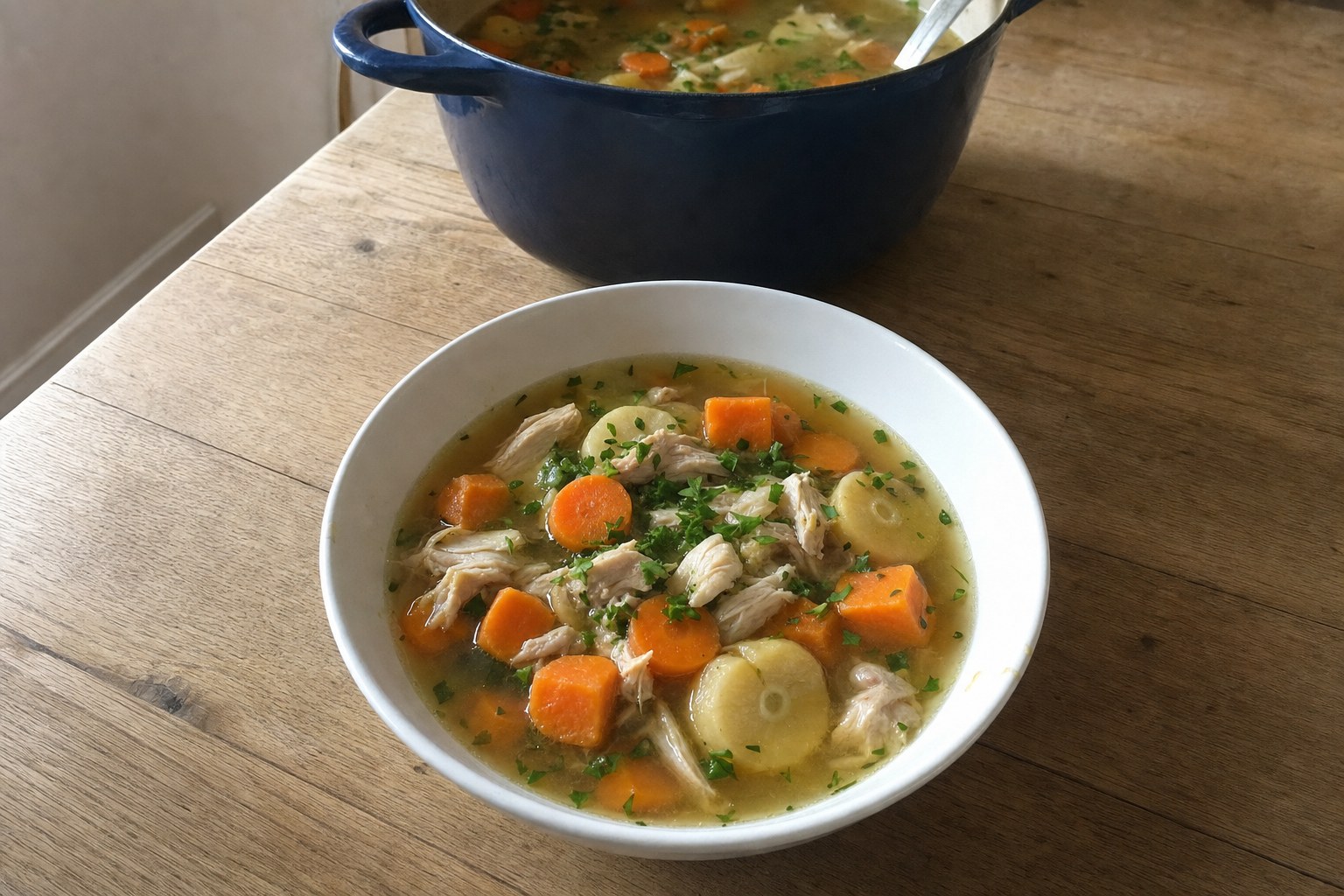
Chicken soup built on bone broth and simmered aromatics is one of the oldest sick-day meals there is, and this version keeps that comfort while swapping the noodles for cubes of sweet potato and parsnip soft enough to eat with a spoon. The chicken goes in as bite-size pieces held at a bare simmer rather than a boil, so the thighs come out tender instead of rubbery. It is a hearty, one-bowl meal built almost entirely from ingredients that work to calm inflammation.
What Makes This Recipe Anti-Inflammatory?
Chicken thighs carry more zinc and iron than breast, both useful for immune function, and stay tender through a simmering pot in a way breast rarely does. The homemade bone broth adds glycine, proline and gelatin from the simmered bones, compounds a boxed stock rarely carries.
Carrots and sweet potato bring beta-carotene, absorbed better with the olive oil in the pot. Parsnips are a root vegetable in the carrot family with their own soluble fiber, and thyme contributes thymol, while garlic and onion add organosulfur compounds.
Every ingredient is compliant with the AIP elimination phase. There are no grains, legumes, nightshades, dairy, eggs, nuts, seeds or seed-based spices, and the broth must be homemade, since commercial stock usually carries additives or unlisted spices, while parsnip is a root vegetable in the carrot family rather than a nightshade.
Ingredients
- 1 tablespoon olive oil
- 1 medium yellow onion, diced
- 3 garlic cloves, minced
- 3 medium carrots, sliced into thick coins
- 2 parsnips, peeled and chopped
- 1 medium sweet potato, peeled and cubed
- 6 cups homemade chicken bone broth
- 1 1/2 pounds boneless chicken thighs, cut into bite-size pieces
- 1 tablespoon fresh thyme leaves
- 3/4 teaspoon sea salt
- 2 tablespoons fresh parsley, chopped
Directions
Step 1
Heat the olive oil in a large pot over medium heat and add the onion. Cook for 4 to 5 minutes, stirring occasionally, until soft and translucent.
Step 2
Add the garlic and cook for 30 seconds, until fragrant. It burns fast in hot oil and turns bitter just as fast.
Step 3
Add the carrots, parsnips and sweet potato and stir for 2 to 3 minutes so the roots pick up flavor from the fat. Cut the pieces evenly, so nothing turns to mush waiting on the rest.
Step 4
Pour in the bone broth, add the chicken and thyme, and bring to a gentle simmer, never a boil, for 15 to 18 minutes, until the chicken cooks through and the roots turn tender. Boiled thigh turns rubbery, while a bare simmer keeps it silky. Skim off any foam that rises early on, since it clouds the broth if stirred back in.
Step 5
Season with the salt near the end, since the broth reduces as it simmers and early salt concentrates further than intended.
Step 6
Take the pot off the heat and stir in the parsley.
Nutrition Facts (per serving)
| Calories | 350 |
| Fat | 16g |
| Carbs | 20g |
| Protein | 30g |
InflammaScore
1 Good! Very low inflammation potential
Q&A
Q1: Is this recipe suitable for the AIP elimination phase?
A1: Yes. Olive oil, onion, garlic, carrots, parsnips, sweet potato, homemade chicken bone broth, chicken thighs, thyme, sea salt and parsley are all permitted during elimination. The noodles in a classic chicken soup are wheat and are left out, with sweet potato and parsnip doing that job. The broth must be homemade, since commercial stock usually carries additives, and parsnip is a root vegetable in the carrot family, not a nightshade.
Q2: Why did my chicken turn rubbery?
A2: The pot most likely boiled instead of simmered. A rolling boil tightens muscle fibers and squeezes out moisture, while a bare simmer with lazy bubbles keeps the meat silky.
Q3: Can I use chicken breast instead?
A3: Yes, though breast dries out faster than thigh. Add it about 5 minutes later, and pull the pot off the heat the moment it cooks through.
Q4: What is that foam on top, and do I need to skim it?
A4: That foam is coagulated protein released from the chicken as it heats. It is harmless, but it clouds the broth if stirred back in, so skim it off early in the simmer.
Q5: How long does it keep, and does it freeze?
A5: It keeps for 4 days in the fridge and tastes better on day two. It freezes well for up to 3 months, and the roots hold their texture better if the pot was not overcooked.