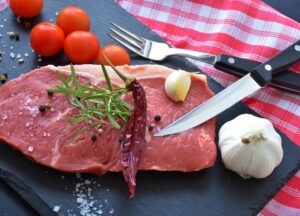
Red Meat vs Salmon: Which Is Less Inflammatory?

Red Meat

Salmon
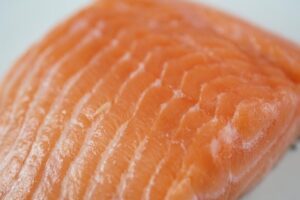
Salmon is less inflammatory than red meat, and it is not even close. Both serve as the main protein on your plate, so you can swap one for the other without changing how you cook.
Red meat sits high on the scale because of its saturated fat and the high heat it is usually cooked with. Salmon does the opposite: its omega-3 fats are the nutrient with the most research behind them for calming inflammation. If you eat red meat four times a week, switching two of those meals to oily fish is one of the easiest changes you can make.
Side by side
| Red Meat | Salmon | |
|---|---|---|
| Inflammation Score | High · 7/10 | Low · 1/10 |
| Category | Proteins | Fish & Seafood |
| Serving size | 3 oz (85 g) cooked | 3 oz (85 g) cooked |
| Key nutrients | Protein, Heme iron, Zinc, Vitamin B12 | Omega-3, Protein, Vitamin D, Selenium |
| How often | — | 2-3 servings a week |
On the AIP diet
Red Meat
Unprocessed red meat is allowed on the Autoimmune Protocol and is a staple protein during the elimination phase. What AIP cuts is the processed end of the category: cured, smoked and seasoned meats, which usually carry seed spices, sugar and additives.
Salmon
Wild-caught salmon is a cornerstone protein of the Autoimmune Protocol. It stays on the plate during the elimination phase and through every reintroduction stage, which makes it one of the safest proteins to build meals around.
What each one brings
Red Meat
- Complete protein with all the amino acids you need
- Iron in the form your body absorbs most easily
- One of the few reliable food sources of vitamin B12
- Short trials on unprocessed beef show little change in inflammation blood tests
Salmon
- EPA & DHA lower inflammatory markers
- Complete, highly digestible protein
- Astaxanthin, a rare antioxidant
- Supports heart and brain health
Watch out for
Red Meat
- Bacon, sausage and deli meat are a different risk category altogether
- High-heat cooking creates compounds your body treats as irritants
- High in saturated fat
- Crowds out fatty fish if it becomes your default protein
Salmon
- Farmed salmon: fewer omega-3s, more contaminants
- Smoked versions add nitrates and sodium
- Frying destroys part of the omega-3 content