| Prep Time | Cook Time | Total Time | Servings |
|---|---|---|---|
| 10 minutes | 15 minutes | 25 minutes | 4 |
What Is Lemon Thyme Baked Salmon with Asparagus?
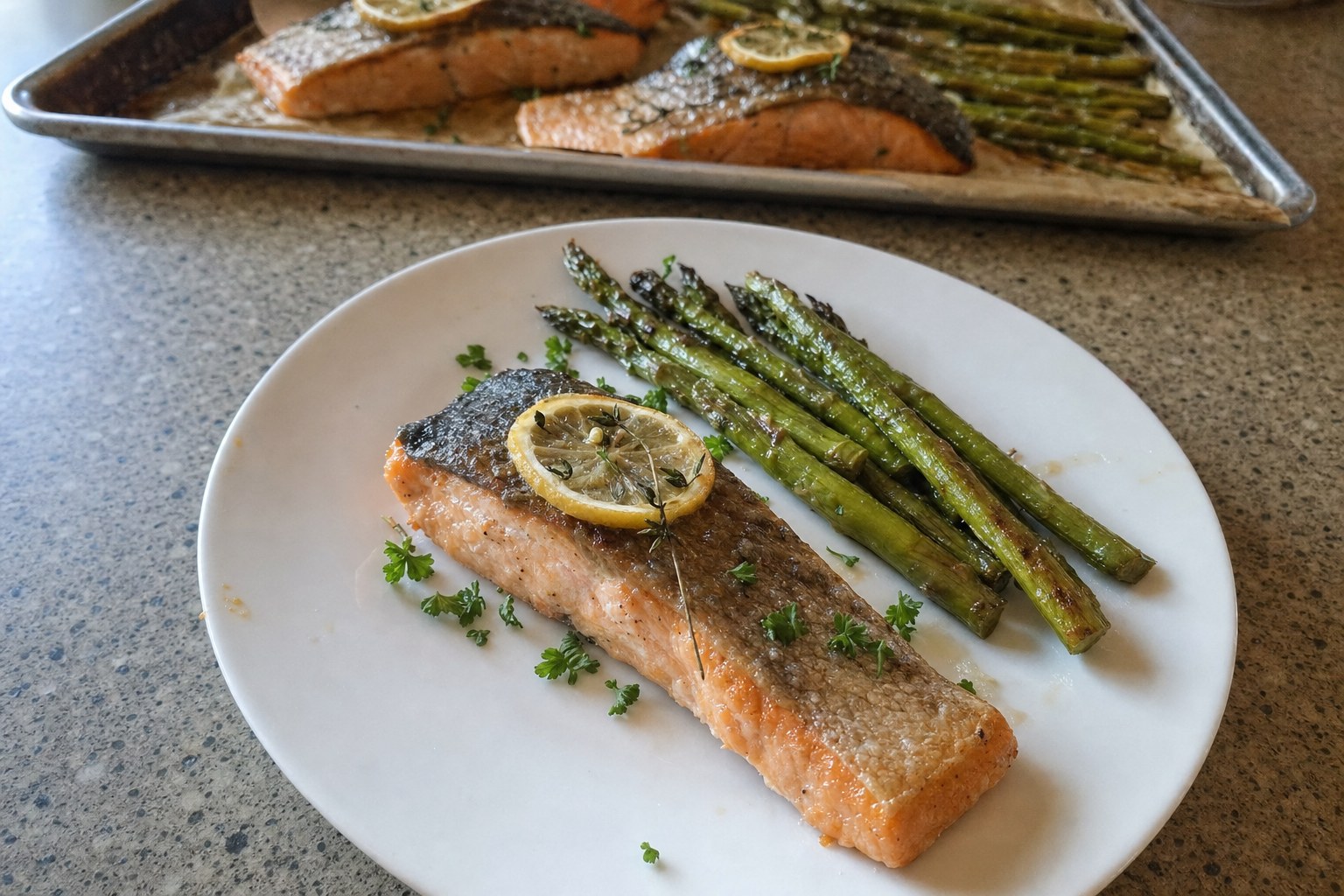
Baking fish directly over vegetables is a trick borrowed from Mediterranean home cooking: the fillets release their juices as they cook and season whatever sits underneath them, so nothing needs a sauce. Here the asparagus steams in salmon fat and lemon while the tops of the fillets take on colour, which means the whole dinner leaves the oven at the same moment, 25 minutes after you started. It also puts two of the most studied anti-inflammatory foods on one plate, oily fish for its omega-3 fats and asparagus for its folate and antioxidants.
What Makes This Recipe Anti-Inflammatory?
Salmon is one of the richest food sources of EPA and DHA, the long-chain omega-3 fats that the body uses to make resolvins, the molecules that switch inflammation off once it has done its job. Asparagus adds folate and glutathione, and thyme carries thymol and rosmarinic acid, two polyphenols that behave as antioxidants in the gut. Lemon juice helps here too, since the vitamin C in it improves how much iron and other minerals you absorb from the meal.
Every ingredient is compliant with the AIP elimination phase. There are no grains, legumes, nightshades, dairy, eggs, nuts, seeds or seed-based spices, and the seasoning comes from thyme and lemon rather than from a spice blend.
Ingredients
- 4 salmon fillets, skin on (about 6 ounces each)
- 1 pound asparagus, woody ends trimmed
- 2 tablespoons extra virgin olive oil, divided
- 1 lemon, half sliced thin and half kept for juice
- 2 tablespoons fresh thyme leaves
- 3 garlic cloves, thinly sliced
- 3/4 teaspoon sea salt, divided
- 2 tablespoons fresh parsley, chopped, for serving
Directions
Step 1
Preheat your oven to 400°F (200°C). Toss the asparagus with 1 tablespoon of the olive oil, the sliced garlic and a quarter teaspoon of the salt, then spread it in a single layer in a baking dish.
Step 2
Pat the salmon fillets dry, rub them with the remaining olive oil and season with the rest of the salt and half the thyme. Lay them skin side down on top of the asparagus.
Step 3
Tuck the lemon slices between and over the fillets, then scatter the remaining thyme across the dish.
Step 4
Bake for 12 to 15 minutes, until the salmon flakes when you press it with a fork and the thickest part reads 125°F (52°C) for medium. Thin fillets can be ready at 10 minutes, so check early rather than late.
Step 5
Squeeze the reserved lemon half over the dish, scatter the parsley and serve straight from the baking dish while the asparagus is still bright.
Nutrition Facts (per serving)
| Calories | 430 |
| Fat | 29g |
| Carbs | 5g |
| Protein | 36g |
InflammaScore
1 Good! Very low inflammation potential
Q&A
Q1: Is this recipe suitable for the AIP elimination phase?
A1: Yes. Salmon, asparagus, olive oil, lemon, garlic, thyme and parsley are all permitted during elimination. There is no black pepper in the ingredient list, since peppercorns fall outside the herbs that come from leaves and roots, and no seed-based spices such as cumin, coriander or mustard.
Q2: Can I use frozen salmon?
A2: Yes, but thaw it fully in the fridge overnight and pat it very dry before it goes in the dish. Cooking salmon from frozen releases water that pools around the asparagus and steams it into something limp, and the fillets need a few extra minutes that the vegetables cannot take.
Q3: What can I use instead of asparagus?
A3: Broccolini, green beans that have been reintroduced, thin zucchini batons or halved brussels sprouts all bake in a similar time. Give denser vegetables like brussels sprouts a 10 minute head start in the oven on their own, then add the salmon so both finish together.
Q4: How do I know when the salmon is done?
A4: The flesh turns from translucent to opaque and separates into flakes under light pressure from a fork. A thermometer in the thickest part should read 125°F (52°C) for a moist centre or 145°F (63°C) if you prefer it fully cooked through, and the fish keeps cooking for a minute or two after it leaves the oven.
Q5: Does it work for meal prep?
A5: It keeps for two days in the fridge and is better eaten cold than reheated, since a second round of heat dries the salmon and softens the asparagus. Flake the leftovers over a salad with olive oil and lemon rather than putting the dish back in the oven.