Almond Milk vs Oat Milk: Which Is Less Inflammatory?
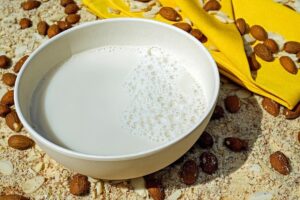
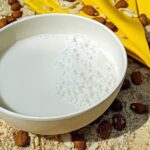
Almond Milk
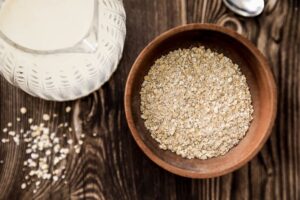
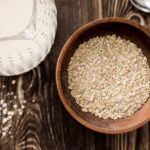
Oat Milk
Almond milk is less inflammatory than oat milk. Both are dairy free and both foam, so the choice comes down to what else ends up in the carton.
Oat milk is made by breaking the oat starch down with enzymes, and that process leaves sugar behind, which is why a glass lifts your blood sugar faster than cow’s milk does. Barista versions add rapeseed or sunflower oil on top of that, to make the foam hold. Unsweetened almond milk carries almost no sugar at all, so buy the plain version and skip the vanilla and chocolate ones, whichever milk they start from.
Side by side
| Almond Milk | Oat Milk | |
|---|---|---|
| Inflammation Score | Low · 3/10 | Medium · 5/10 |
| Category | Beverages | Beverages |
| Serving size | 1 cup (240 ml) | 1 cup (240 ml) |
| Key nutrients | Vitamin E (alpha-tocopherol), Calcium (fortified), Vitamin B12 (fortified), Gellan gum (added) | Maltose (from enzymes), Beta-glucan, Rapeseed oil (added), Calcium (fortified) |
| How often | Daily, unsweetened and fortified | A splash in coffee daily, unsweetened rather than barista |
On the AIP diet
Almond Milk
Almond milk is not allowed during the elimination phase of the Autoimmune Protocol. AIP takes out all nuts from day one, and almond milk is a nut in liquid form. Most cartons add gums and emulsifiers, which are off the list on their own terms. Nuts come back early in the reintroduction, so a plain unsweetened carton is an easy first test. During the elimination, unsweetened coconut milk is the plant milk that fits.
Oat Milk
Oat milk is not allowed on the Autoimmune Protocol. It is made from a grain, and the elimination phase takes out every grain without exception. The rest of the carton makes it doubly awkward, because the seed oils in barista versions and the gums that keep it smooth are off the list on their own terms. During the elimination, unsweetened coconut milk is the usual stand-in.
What each one brings
Almond Milk
- No lactose and no milk protein, the two parts of dairy people actually react to
- An unsweetened carton has almost no sugar, which is rare among plant milks
- Brings vitamin E, the antioxidant that protects the fat in your cell membranes
- Most brands are fortified, so it gives back the calcium and B12 that dropping dairy takes away
Oat Milk
- No lactose and no milk protein, so it suits the people that dairy does not
- Some of the oat's soluble fibre survives into the glass, and it brings cholesterol down
- Nut free, which matters when almond and cashew milks are off the table
- Most brands are fortified, giving back the calcium and B12 that leaving dairy takes away
Watch out for
Almond Milk
- Sweetened and flavoured versions carry as much sugar as a soft drink
- Mostly water, with two to four percent almonds, so no real protein or fat
- Gums are added to stop it separating, and some guts dislike them
- Not an option with a tree nut allergy, and a poor milk for young children
Oat Milk
- Enzymes break the oat starch into sugar during production, so it lifts blood sugar faster than cow's milk
- Barista versions add rapeseed or sunflower oil to make the foam hold
- Sweetened cartons pile sugar on top of the sugar the process already made
- It is made from a grain, so it is out during the AIP elimination phase
Get the inflammation score of any meal
Just snap a photo or describe your food to get its inflammation score and uncover hidden patterns that may be affecting your well-being.