
You’ve probably seen quercetin supplements lining the shelves at your local health food store. The labels promise powerful antioxidant benefits and inflammation fighting.
But here’s something those bottles don’t tell you: your body struggles to actually absorb this compound when you take it as a pill. New research shows that what happens in a lab doesn’t always happen in your body.
What the Research Shows
Scientists recently reviewed dozens of clinical trials testing quercetin supplements. They wanted to know if this flavonoid really delivers on its big promises for heart health and metabolism.
The studies gave people between one hundred fifty and one thousand milligrams of quercetin daily. The trials lasted several months. Researchers tracked blood pressure, inflammation markers like CRP and TNF-alpha, and antioxidant levels.
The results were mixed at best:
- Blood pressure dropped slightly in some studies, about two to five points at most
- Inflammation markers decreased in certain people but not consistently
- Antioxidant effects that work beautifully in test tubes barely showed up in actual humans
Here’s the real issue: quercetin has terrible bioavailability. That means your digestive system can’t easily break it down and send it into your bloodstream. The amount you swallow has little to do with how much your body actually uses.
Think of it like trying to absorb water through a raincoat. The quercetin is there, but it mostly passes right through you without getting absorbed. This explains why promising lab results didn’t translate to real people taking supplements.
What This Means for You
The good news is you don’t need expensive supplements. Nature already solved the absorption problem.
Get Quercetin from Whole Foods
When you eat foods naturally rich in quercetin, it comes bundled with fiber and other plant compounds. These work together to help your body absorb and use the quercetin far more effectively than an isolated pill.
The best food sources are surprisingly common:
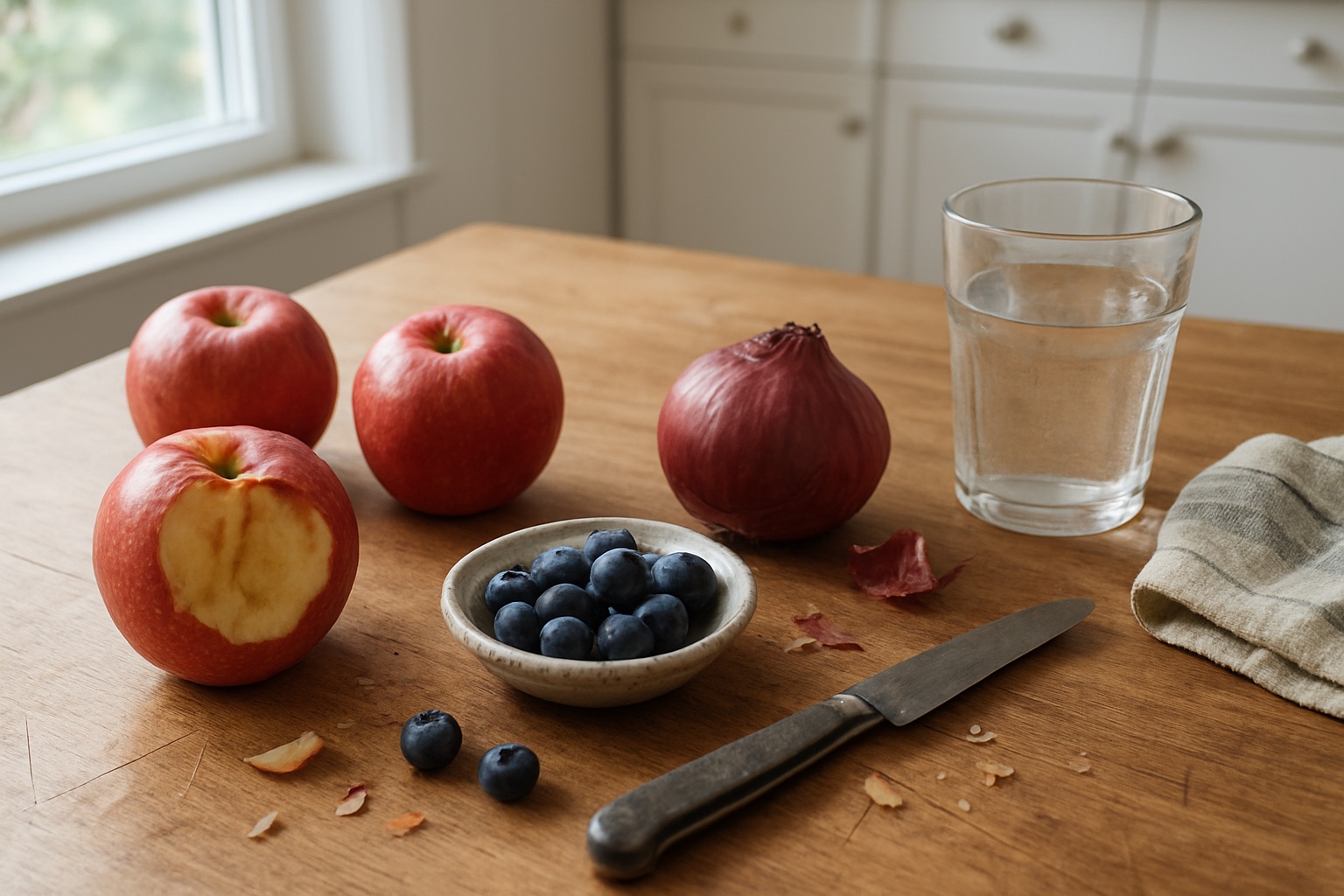
- Apples with the skin on – the peel contains most of the quercetin
- Red onions – one of the richest sources you can find
- Green tea – provides quercetin along with other beneficial compounds
- Berries – especially blueberries and cranberries
Add these foods to your daily routine instead of reaching for a supplement bottle. You’ll get similar or better quercetin intake, plus you’ll benefit from all the other nutrients and fiber these foods provide.
Skip the Supplements
Given the weak and inconsistent evidence in humans, save your money on quercetin supplements. The research shows they rarely deliver meaningful results. The few studies that did show benefits were small and inconsistent.
If you’re dealing with high blood pressure or chronic inflammation, work with your healthcare provider on proven treatments. Don’t rely on quercetin supplements as your solution.
Whole foods rich in quercetin can absolutely be part of a healthy anti-inflammatory diet. Just don’t expect them to work miracles. They’re one piece of a bigger puzzle that includes exercise, stress management, and overall diet quality.
Sometimes the supplement industry takes something that works in theory and packages it in a way that simply doesn’t work in practice. Quercetin appears to be one of those cases. Stick with the real food version and let nature do what it does best.
Reference: https://www.mdpi.com/1422-0067/26/11/5206