| Prep Time | 15 minutes |
|---|---|
| Cook Time | 40 minutes |
| Total Time | 55 minutes |
| Servings | 4 |
What Is Spaghetti Squash with Avocado Pesto?
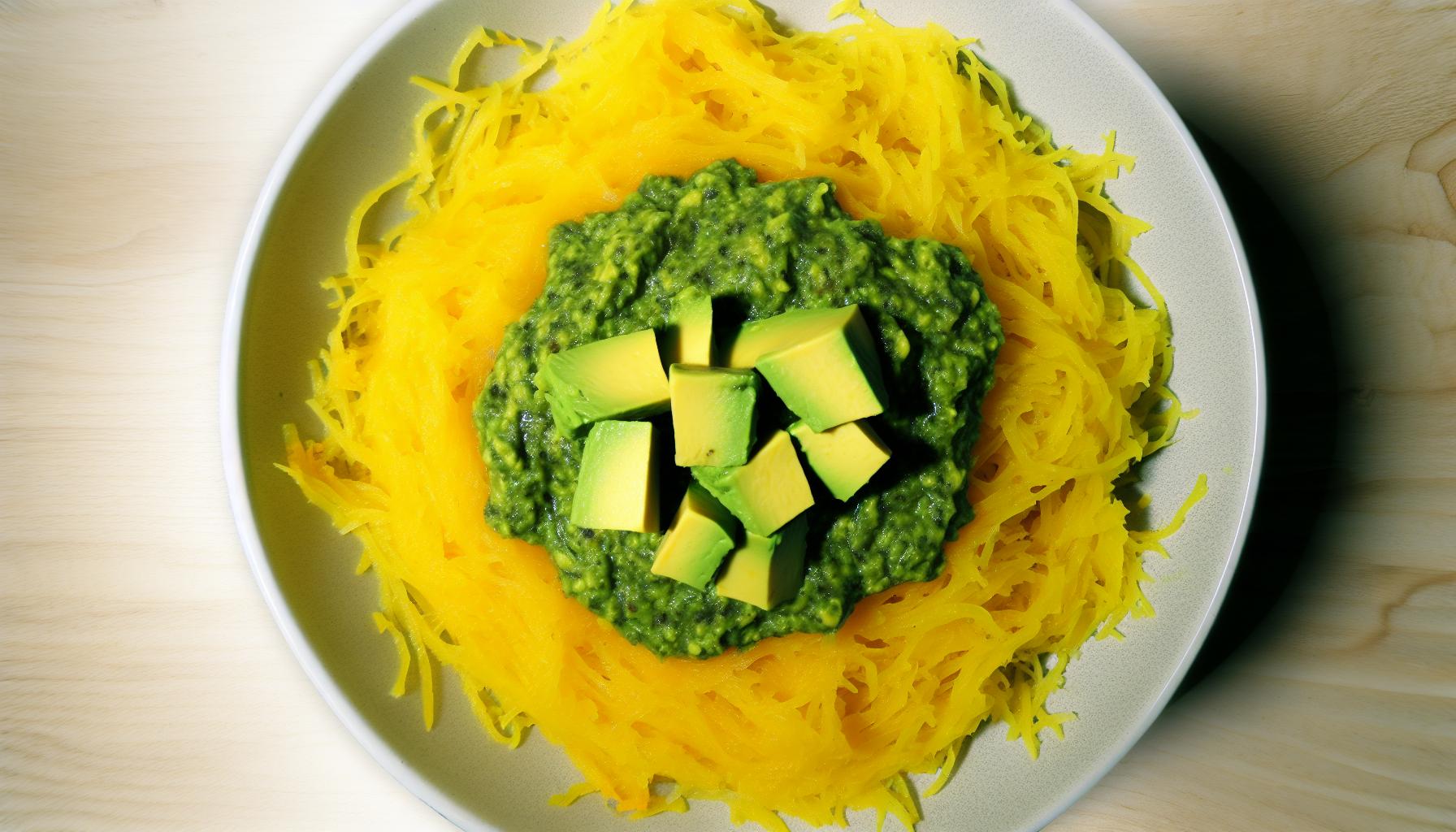
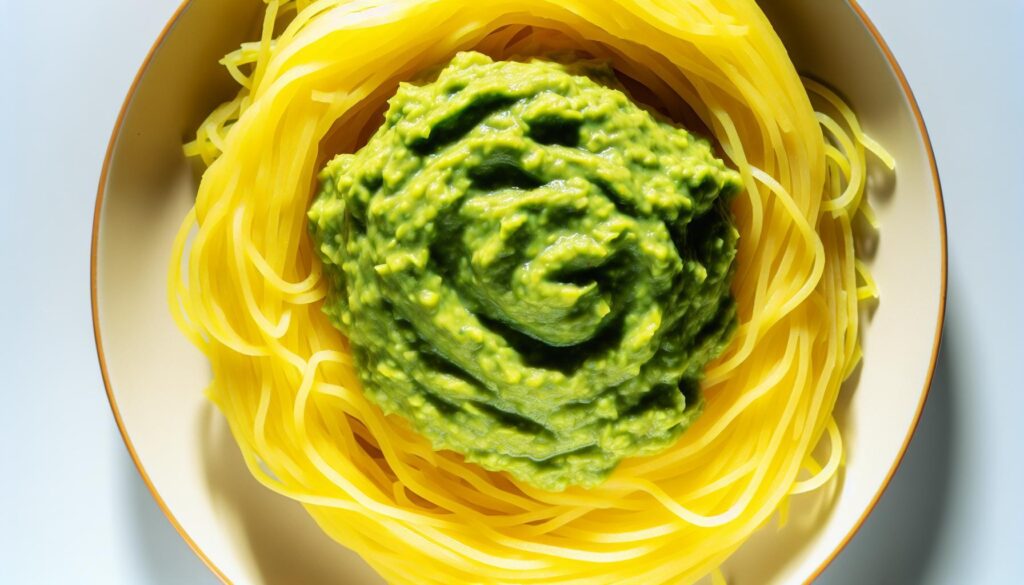
This vibrant dish combines the naturally stringy flesh of spaghetti squash with a rich, creamy avocado pesto, blending fresh herbs and nuts for a uniquely smooth texture. Originating as a wholesome twist on traditional pasta, it’s packed with wholesome ingredients that deliver both flavor and nutrition.
What Makes This Recipe Anti-Inflammatory?
The key players in this recipe are avocado and fresh herbs like basil, both known for their powerful antioxidant and anti-inflammatory compounds. Avocados provide heart-healthy monounsaturated fats, which help reduce inflammation and support cellular health.
Additionally, the nuts in the pesto—usually walnuts or pine nuts—contain omega-3 fatty acids that combat inflammatory pathways. The spaghetti squash itself is a low-glycemic vegetable rich in fiber, aiding in stabilizing blood sugar levels and preventing inflammation spikes.
Ingredients
- 1 medium spaghetti squash (about 3 pounds)
- 1 ripe avocado
- 1 cup fresh basil leaves
- 1/4 cup pine nuts or walnuts
- 2 cloves garlic, minced
- 2 tablespoons fresh lemon juice
- 1/4 cup extra virgin olive oil
- Salt and freshly ground black pepper, to taste
- Optional: 2 tablespoons nutritional yeast for a cheesy flavor
Directions
Step 1
Preheat your oven to 400°F (200°C). Slice the spaghetti squash in half lengthwise and scoop out the seeds. Place the halves cut-side down on a baking sheet lined with parchment paper.
Step 2
Bake the squash for 35-40 minutes, or until the flesh is tender and easily shredded with a fork. Once done, let it cool slightly.
Step 3
Meanwhile, prepare the avocado pesto. In a food processor, combine avocado, basil, pine nuts, garlic, lemon juice, and olive oil. Blend until smooth, scraping down the sides as needed. Season with salt and pepper to taste.
Step 4
Using a fork, gently scrape the spaghetti squash flesh into strands, transferring them to a large bowl.
Step 5
Toss the spaghetti squash strands with the avocado pesto until evenly coated. Adjust seasoning if necessary. Serve immediately for the freshest taste.
Step 6
Optional: Sprinkle with nutritional yeast or extra pine nuts for added texture and flavor.
Nutrition Facts (per serving)
| Calories | 220 |
|---|---|
| Fat | 16g |
| Carbs | 15g |
| Protein | 4g |
InflammaScore
1 Good! Very low inflammation potential
Q&A
Q1: What makes spaghetti squash a great alternative to traditional pasta in this recipe?
A1: Spaghetti squash offers a naturally low-carb, gluten-free base with a mild, slightly sweet flavor. When cooked, its flesh separates into spaghetti-like strands, making it an ideal, nutritious substitute that pairs perfectly with creamy avocado pesto.
Q2: How does avocado pesto differ from classic basil pesto?
A2: Avocado pesto replaces or complements the usual pine nuts and cheese with creamy avocado, lending a rich, smooth texture and a subtle buttery taste. It’s often lighter and dairy-free, making it a fresh twist on the traditional blend of basil, garlic, and olive oil.
Q3: What are some tips for cooking spaghetti squash to get perfect strands?
A3: To achieve tender, noodle-like strands, roast the squash cut-side down on a baking sheet for about 40-45 minutes at 400°F. This method softens the flesh evenly and makes it easy to shred with a fork without becoming mushy.
Q4: Can the avocado pesto be prepared in advance?
A4: Yes, avocado pesto can be made a few hours ahead and stored in an airtight container, but to prevent browning, press plastic wrap directly onto the surface or add a squeeze of lemon juice before refrigerating.
Q5: What complementary ingredients can enhance the flavor and texture of this dish?
A5: Adding toasted pine nuts or walnuts brings crunch, while cherry tomatoes or roasted red peppers provide bursts of sweetness and color. Fresh herbs like basil or parsley can elevate the aroma and freshness of the final plate.
This Spaghetti Squash with Avocado Pesto recipe offers a fresh twist on a classic favorite, blending creamy, vibrant flavors with wholesome goodness. Whether as a light dinner or a satisfying side, it’s a simple way to brighten your plate and nourish your body.